 Skip to main content
How to Launch Your Gojek Clone App in the US

Looking to break into the multi-service on-demand market in the United States? This guide is for entrepreneurs and startups ready to create their own Gojek-style super app for the American market. We will run through the stages required to convert your multi-service app idea into a successful US launch, covering market research strategies, technical needs, and legal ideas that you will need to navigate.
First of all, we will find out how to customize the Gojek clone concept for American consumers, showing you how to identify which services will be the most relevant to American users. Then, we will break technical development requirements, including platform options and integration solutions that will help your app stand out. Finally, we will guide you through a complex American compliance scenario, which will help you to avoid expensive legal losses that can derail your launch.
Understanding the Gojek Clone App Concept

What is a Gojek clone and its key features
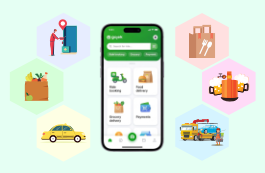
A Gojek clone is a one-stop superstore of all the services the original Gojek offers in the country of Indonesia. It consolidates several on-demand services in one app, typically called a “super app.” This type of app enables access to features like booking a ride, ordering food, grocery shopping, paying your bills, and shipping a package — all from a single app.
Key features typically include:
- Multi-service integration: One platform that brings together various services
- Single user account: Customers can use a single login to access all services
- Single payment system: A single wallet or payment method that would apply across all services
- Live tracking: Customers can track deliveries and rides with GPS
- Rating and review system: Customers can share feedback to help maintain service quality
- Service provider management: Tools that help merchants and service providers manage their operations
- Admin dashboard: A complete control center for those running the platform
Why the US market is suitable for super app expansion
The US market presents a significant opportunity for super app expansion due to several factors:
- High smartphone penetration: With more than 85% Americans being smartphone owners, there is a prepared audience for mobile-based services
- Flagistic service landscape: American consumers currently use several apps for various services, which allows for consolidating
- Rising on-demand economy: US rapid price facility and quick service supply
- Consumer habits developing: Change and in-store purchases towards post-pandemic digital services
- Mature Digital Payment Infrastructure: Digital Payment Methods widely adopted
- Strong gig economy appearance: Abundant potential service providers are already familiar with stage-based work
Benefits of launching a multi-service platform
Implementing a multi-service platform offers numerous advantages:
- Revenue Diversification: Many service streams create various income sources
- Cross-Service Promotion: Ability to bring new services to the market for existing users
- Increased customer retention: Users live within the ecosystem for various requirements
- Customer acquisition costs are low: spend low on marketing to attract users for new services
- Data coordination: valuable user behavior gives insight into several service categories
- Science economies: Shared infrastructure reduces operating costs
- Network Effect: Each new service and user platforms increase the price
- Competitive Benefits: High switching costs for users after adopting many services
With these benefits in mind, next, we’ll see how market research and planning play crucial roles in successfully launching a Gojek clone in the US market.
Market Research and Planning

Analyzing US Consumer Behavior and Preferences
Before introducing the Gojek Clone app to the US market, it is essential to understand whether the US consumer shares the characteristics of a typical American consumer. When it comes to the use of on-demand services, American consumers generally appreciate the quick convenience, and simplicity is key. They want intuitive interfaces, clear pricing, and dependable service delivery.
US customers have higher service quality and response time expectations than customers in some markets where Gojek-type apps are common. They are more prone to use ratings and reviews before trying out new services, so initial quality control is key. Also, Americans are getting more worried about data privacy and security, so your app should, in some way, address that problem, too.
Payment behavior trends in the US continue to shift in favor of credit cards and electronic/mobile wallets, while the use of cash is diminishing. Ensure your gateway is capable of accommodating these preferences to make it PCI compliant.
Identifying Target Demographics and Locations
Your Gojek clone will also most probably be most successful initially in densely populated cities and suburbs with the largest issues of transport, time, and service in the market conditions. These are ideal launch markets due to their high population density and the presence of the gig economy in major cities like New York, San Francisco, Chicago, and Los Angeles.
For demographic targeting, focus on:
- Career-driven (25-40) and desire more on-the-go convenience than they are willing to pay for
- Tech-smart millennials and Gen Z consumers
- Brown urbanites who lack their cars
- Parents looking for time-saving shortcuts
Think about secondary markets in mid-sized cities with university populations, which tend to attract early adopters. Customization of services may need to take place at the level of each study area.
Competitive Landscape Analysis
The US market already features established players in various service categories your Gojek clone will address:
- Ride-sharing: Uber and Lyft are the big players
- Food delivery: DoorDash, Uber Eats, Grubhub, and Postmates are also major players
- Grocery delivery: Instacart, Amazon Fresh, and Walmart Delivery
- Task-based services: TaskRabbit and the like
To carve out market share, identify gaps in existing service offerings. This might include:
- More competitive pricing models
- Better service provider compensation structures
- Bundled services for customer convenience
- Loyalty programs that cross multiple service categories
- Enhanced safety features or service guarantees
Learn when your competitors are weak by reading through their customer reviews and social media accounts. Your multi-service platform’s main value proposition will be to offer all those services under a single app and address the “app fatigue” that most consumers are feeling. But you’ll also have to match and then even surpass the quality those specialized single-service apps offer if you want to stay competitive in this space.
Technical Development Requirements

Essential Features for the US Market
When it comes to building a Gojek clone app for the US, there are a few features that are must-haves owing to the American consumer preferences. Your app will need to have some sort of tracking system for users to know exactly where their service provider is in real time. A strong rating and review system is also necessary, as US shoppers are dependent on social proof before they decide to buy.
That platform should have a portfolio of service verticals: ride-hailing, food delivery, grocery delivery, and on-demand professional services–all available through the same interface. US users want to be able to book both on the spot and in advance. It would also be helpful to build in-app messaging and calling features in order to make the experience better while communicating through messages and calls between users and the service providers.
Platform Compatibility Considerations
To have a maximum reach of the US market, your Gojek clone should be perfectly working on numerous platforms. Create native apps for IOS and Android, work with IOS new OS, and support old versions with high traffic.
You should have a web platform, responsive and with the mobile user in mind, for those who enjoy a good old browser handle. Platform agnosticism is key – people should have the same experience whether they’re coming to you from a phone or a computer. Performance tuning will be critical no matter the platform because American consumers simply will not tolerate slow load times or service downtime.
Payment Gateway Integration Options
The US market needs a variety of secure payment options. And for them to pay, your Gojek clone app must integrate with major credit card processors ( Visa, Mastercard, and American Express) as a baseline requirement. Furthermore, by bringing the likes of Apple Pay, Google Pay, and PayPal to the device, you will enable more and more of your users who use contactless payment.
If you want to be even more flexible, consider also enabling ACH transfers for some services and subscriptions. The payment process itself must adhere to PCI DSS to secure the data. Integrating a wallet feature on your app can improve user retention, and features such as split payments also offer added convenience that American users are gradually expecting from service platforms.
Every payment integration needs to experience good testing for its functionality and security, especially the fraud prevention system that protects your business and customers as well.
Legal and Compliance Considerations

US transportation and delivery service regulations
Launching a Gojek clone script app in the US, It is mandatory to know and concentrate on the transportation and delivery laws. States and cities have various ways of dealing with ride sharing, food deliveries and courier servi ces.You’ll need to research and comply with:
- Ride-hailing service regulations for Transportation Network Companies (TNCs)
- ICC requirement for crossing state operations
- Fares, rules, and coverage by local taxi and limousine commissions in major keywords
- Department of Transportation rules and regulations for commercial vehicles
- Food handling permits and certifications for food service components delivered to the door.
Drivers in many states are required to hold special licenses, meet insurance minimums and pass background checks. These measures need to have direct access to your app to remain compliant. Create a compliance checklist for every new market in which you want to operate, working with transportation law attorneys.
Data privacy and protection requirements
The US has a complex landscape of data privacy laws that will directly impact your Gojek clone app. Key considerations include:
- CCPA compliance if serving the residents of California
- GDPR considerations for EU users
- Data breach notification laws by state
- Payment Card Industry Data Security Standard (PCI DSS) compliant for processing payments
- The Health Insurance Portability and Accountability Act (HIPAA), if you deliver medication
Your app needs to have appropriate data encryption, secure user authentication, open and visible privacy information, and clear opt-in consent. You should perform regular security and data protection impact audits to stay compliant and keep your customers’ good faith.
Employment laws for gig workers
The classification of workers in your Gojek clone platform requires careful consideration of evolving gig economy regulations:
- Independent contractor vs. employee classification rules (which vary by state)
- AB5 legislation in California and similar laws in other states
- Minimum wage requirements that may apply to gig workers
- Benefits and protections that may be mandated for app-based workers
- Liability considerations and insurance requirements
Recent court rulings and legislation have been testing conventional contractor paradigms. These issues should be addressed in your business structure, and providers should be treated under contract appropriately. You might want to add transparent wage calculation, flexible shift planning, and perhaps a mixed employment model to minimize the legal risks.
Building Your Service Provider Network

The backbone of any successful Gojek clone app is a robust network of service providers. Without reliable drivers and service professionals, even the most technically advanced platform will fail to meet customer expectations in the competitive US market.
Recruiting Strategies for Drivers and Service Providers
To build a strong service provider network in the US, implement these targeted recruitment approaches:
- Use gig economy services to find drivers who are accustomed to completely flexible models like this
- Hold recruiting sessions in targeted urban areas where your app is going to launch initially
- Enact a bonus system for current providers who recruit new quality personnel
- Integrate with professional associations in your service categories (transportation, food delivery, home services)
- Use targeted social media campaigns articulating the flexibility and earning potential
Design a compelling recruiting story focusing on what is original about your platform in comparison to the established companies, such as Uber or DoorDash.
Verification and Quality Control Processes
Maintaining high standards is crucial for US market success:
- Develop a thorough background check system compliant with state-specific regulations
- Implement a multi-stage verification process including:
- Identity verification
- License and certification validation
- Vehicle inspections (for transport providers)
- Skills assessment (for specialized service providers)
- Create a rating and review system that encourages accountability
- Establish clear service standards with regular quality audits
- Design an efficient complaint resolution mechanism to address customer concerns
Remember that US consumers expect consistent quality and safety when using on-demand services.
Commission Structure and Incentive Planning
Design a sustainable yet attractive compensation model:
- Establish a tiered commission system by service category and by provider performance
- Provide high-performing providers with bonuses based on performance
- Implement surge pricing models for peak times that benefit both providers and platforms
- Provide early-adopter incentives to establish initial service capacity
- Craft loyalty programs that incentivize the provider to carry the account for the long term
Your incentive structure should be aggressive enough to get providers from established platforms but it should be profitable as well. You may want to provide unique benefits like accident insurance, reduced fuel rates, or maintenance deals to stand out in the US.
Marketing Strategies for US Launch

Marketing Strategy for a Kickstart in US market for your Gojek clone app You need to have a strategy that will get your gojek clone app noticed, help in user acquisition and make key partnerships. This is how you can successfully market your multi-service app to U.S. customers!
Pre-launch Awareness Campaigns
Building anticipation before your app goes live is crucial for a successful launch:
- Social Media Teasers: A good, spaced-out social content calendar with teasers such as fun, catchy videos and graphics on what your app does and how it benefits people.
- Influencer Partnerships: Partner with micro-influencers in markets you are going to, who match your brand values and spur authentic buzz.
- Press Release Distribution: Craft compelling stories about how your app will transform local service delivery and distribute to tech and business publications.
- Landing Page & Email List: Design a pre-launch page with a countdown and offer early access or talents for early subscribers.
- Community Events: Plan virtual or in-person demonstrations of your app in targeted neighborhoods to collect early feedback.
User Acquisition Tactics and Promotions
The transition of Awareness to Actual Downloads and Usage is incentivized strategically:
- Referral Programs: Offer double-sided incentives where the referrer and the fresh user both earn credits.
- Analyze Trial Offers: Provide a free month trial of all premium features so users can truly experience your app.
- Location-Based Advertising: Serve up local digital advertisements focused on what services provided in the neighborhood are provided.
- Service Bundles: Create promotional packages combining multiple services at discounted rates.
Partnership Opportunities with Local Businesses
You get market traction more efficiently by utilising your local networks:
- Onboarding Service Providers: Attract high-quality service providers to your listings with launch-phase discounted commission rates.
- Co-marketing with Complementary Businesses: Partner with local restaurants, retail stores, and service businesses for cross-promotional campaigns.
- Chamber of Commerce Connections: Get involved with your local area corporate organization to network and forge partnerships.
- Colleges & Business Programs: Offer discounted rates to universities and businesses to provide an overview of your services to multiple people at one time.
- Community Sponsorship: Sponsor a school sports team, local events, or charity to increase your brand visibility and goodwill.
Armed with these marketing resources, your Gojek Clone App can now dominate the US and make it big. The question is how to sustain the momentum with regularly occurring engagement and service at the same high level as the ride and launch were.
Financial Planning and Investment

Financial Planning and Investment
Developing and launching a Gojek clone app in the US market requires :
- App Development
- Backend Infrastructure
- UI/UX Design
- Quality Assurance
- Legal Compliance Setup
- Initial Server Costs
- Marketing Launch Budget
- Service Provider Onboarding
Revenue projection models
When making in mind to make revenue forecast for your Gojek clone app, do think of multiple sources for it:
- Percentage-Based Model: Charge 15-25% every time members make a transaction
- Subscription costs: From the providers (monthly or annual plans)
- Featured listings: Service provider in the spotlight
- Advertising revenue: In-app advertising opportunities
- Surge pricing: During high-demand periods
The average projection model should include:
- User acquisition rate (month-over-month growth)
- Average transaction value
- Transaction frequency per user
- Retention rates
- Market penetration percentages
The majority of super apps become profitable in 3-5 years after they break even counter after acquiring 100,000+ active users.
Funding options and investor pitching strategies
Securing funding for your Gojek clone requires strategic approaches:
Funding Options:
- Seed fund: For Depend App MVP, Continued testing phase
- Series A: $1M – $5M for market expansion and user acquisition
- Strategic partnerships: Invest alongside transportation or delivery companies
- Venture capital: Look at VC firms specialized in mobility and service marketplaces
- Angels: Find people who have experience in on-demand services
Pitching Strategies:
- Emphasize Market Differentiation: What Makes Your App Unique in the US Market?
- Prove traction: Show that your concept can work even in small pilot programs.
- Demonstrate unit economics: Express per transaction profit projections
Scaling plan outline: Breakdown of expansion plans, city by city
Post-Launch Growth Strategies

Your Gojek clone app in the US market, and that’s not all. You need long-term and sustainable post-launch strategies to not only help your app grow but also evolve and reach a wider audience.
User Feedback Implementation Processes
This speaks to the importance of collecting user feedback as well as to iterating upon your multi-service app. Consider implementing:
- In-app customer rating and feedback system service is provided after confirming the ride
- Specialized customer support hotlines categorizing issues to speed up resolving and identifying common trends
- Targeted user survey to collect detailed feedback about a specific feature or service using surveys for feedback.
- A/B Testing setup to test new features before large-scale launch
- Feedback ranking system which gives priority to users’ suggestions (based on frequency, business impact, and accordance with your roadmap)
Establish a cross-functional team responsible for reviewing feedback weekly and integrating valuable suggestions into your development cycle. This demonstrates to users that their input matters, fostering loyalty and community engagement.
Scaling Operations Across Multiple Cities
Expanding your Gojek clone beyond initial launch cities requires systematic approach:
- Market analysis framework – Constructing a score by evaluating potential expansion cities along the axis, such as demographics, competitiveness, regulatory environment, and potential demand
- Hyper-local customisation – Customise services and pricing to fit the preferences and needs of the local market
- Local group challenges – feature business and community groups from a specific city or neighborhood – at launch!
- Hub and Spoke expansion model – Expand into neighboring cities that can use your current infrastructure and provider network
- Regional promotions – In each major city, promote the USPs for the specific region to be aired natively in Hindi
Legacy and New Markets Expansion team for the launch process, and knowledge transfer between existing and new markets.” They ought to create a set of standard playbooks, but that can be modified as local needs dictate.
Just think, too much growth can stretch your operations and quality control. Better to have a thoughtful, quality-oriented, and slow growth strategy until they find the right partners in each location and stagnate than try to flood the market too fast and have the potential for the greatest return dissipate.
It is not as easy as it sounds to enter the US market with a clone of Gojek because you’d need a strategy on a lot of fronts. From grasping the fundamentals to careful market research, preparing for the technical (with respect to US standards), and dealing with the complex legal obligations, there is much to be wary of. Developing trusted service providers to back you up and marketing targeted at US consumers are just as important to your success.
Getting to launch day is just the beginning. Your finances will need to consider not only setup costs but also ongoing running costs, and your business plan once you’re up and running will likely involve both retaining your existing customers and broadening your range of offerings. With a methodical approach and the right resources for each of these elements, you can successfully pivot your multi-service app in the competitive US market. It’s time to get out of that slow moonwalk and bring their vision to life with an all-in-one way to get Mobile Service Business up and running starting today!

Mohini Patel
Managing Director
Mohini Patel, with years of expertise in the IT and on-demand app industry, leads App Clone with a mission to support startups and enterprises through scalable, ready-made digital solutions. Her strong leadership, strategic mindset, and business insight drive innovation and ensure lasting client success across industries.
Explore Our Ready-Made On-Demand App Services
Explore our top-selling on-demand solutions and discover the perfect match for your business needs.
Grow your business quickly using our customizable Gojek Clone App and On-Demand App Clone. No matter your stage, we offer the right solution to help you launch and succeed.
Start Your Journey to Business Success Today!